
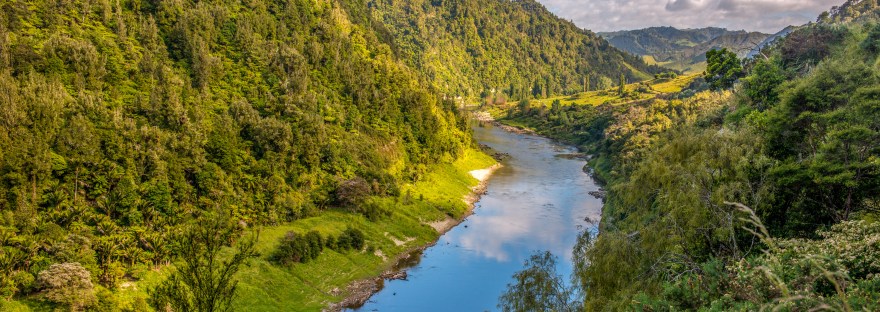
In my series of A-Z of NZ Locations, I will take you for a meander around areas that are unique gems, some yet to be polished though worth a visit for either historical reasons, culinary delights or for the sheer vistas.
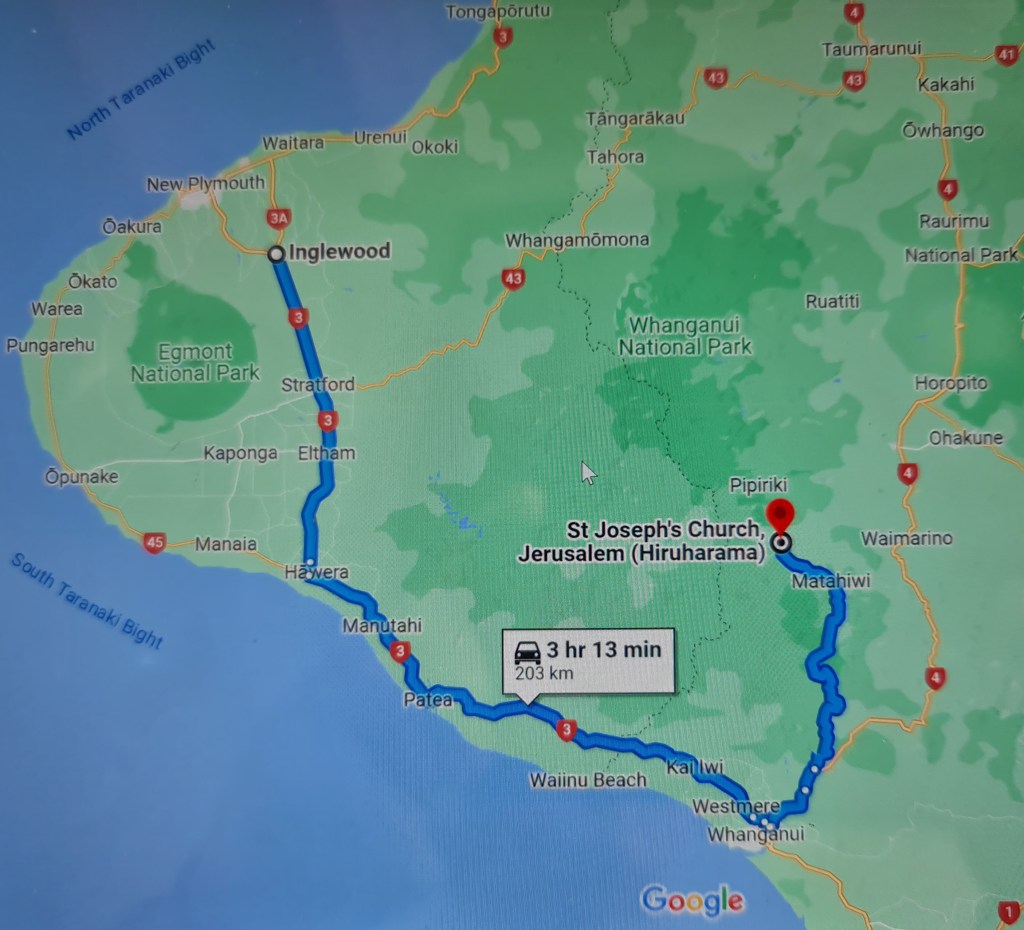
Today’s virtual road trip sees us leaving Inglewood and slightly backtracking south with a slight left turn of the wheels; we head north to a settlement named Jerusalem; though commonly referred to by it’s English name, it can also be referred to as Hiruhārama.
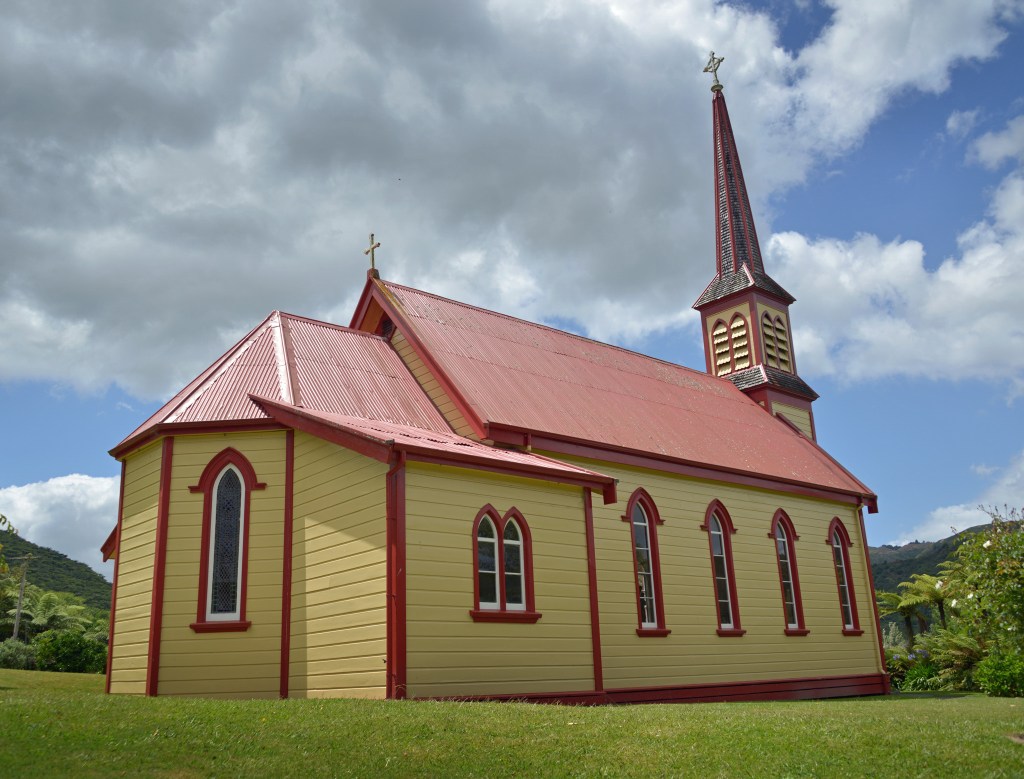
The settlement of Jerusalem is 66 kilometres (41 mi) up the Whanganui River from Whanganui. Firstly, known as Patiarero and was one of the largest settlements on the Whanganui River in the 1840s. It grew into several small settlements, including Roma (named for Rome) and Peterehama (named for Bethlehem), founded by the remains of Taylor’s congregation after the majority converted to Catholicism when a Roman Catholic mission was built in 1854.
Suzanne Aubert

Due to it’s isolation, it also became an ideal location for Suzanne Aubert (better known as Mother Mary Joseph) in 1892 to establish the congregation of the Sisters of Compassion. They became a highly respected charitable nursing and religious order, and the organisation still exists today.

This woman was remarkable in that she could converse in the Māori language, became a Māori cultural adviser and lived acknowledging the culture. She gave her life to helping the underprivileged and orphans.

What’s it like now? Well, there has been a continuous presence of sisters since the convent was established. It remains an integral part of the community, and, as such, the Sisters have the status of tangata whenua (native to the land).


James K Baxter

My introduction to this place was my fascination with communes and a small part with poets, including James K Baxter.
Speaking at a writers’ conference in 1951, Baxter had argued that it was ‘reasonable and necessary that poetry should contain moral truth, and that every poet should be a prophet according to his lights’. The poet ‘should remain as a cell of good living in a corrupt society, and in this situation by writing and example attempt to change it’. These ideas found their full expression in 1968 when Baxter decided to form a community centred on ‘spiritual aspects of Maori communal life’, to ‘try to live without money or books’. For Baxter, who thought Auckland a ‘great arsehole’ and Wellington ‘a sterile whore of a thousand bureaucrats’, this meant retreating to the countryside. A community was established on the Whanganui River at the remote rural settlement of Jerusalem in 1969.
https://nzhistory.govt.nz/people/james-k-baxter
After years of ill health due to alcoholism, he died prematurely in 1972, and the community was disbanded. He was buried in Jerusalem on tribal land.
Summer 1967
BY JAMES K. BAXTER
Summer brings out the girls in their green dresses
Whom the foolish might compare to daffodils,
Not seeing how a dead grandmother in each one governs her limbs,
Darkening the bright corolla, using her lips to speak through,
Or that a silver torque was woven out of
The roots of wet speargrass.
The young are mastered by the Dead,
Lacking cunning. But on the beaches, under the clean wind
That blows this way from the mountains of Peru,
Drunk with the wind and the silence, not moving an inch
As the surf-swimmers mount on yoked waves,
One can begin to shake with laughter,
Becoming oneself a metal Neptune.
To want nothing is
The only possible freedom. But I prefer to think of
An afternoon spent drinking rum and cloves
In a little bar, just after the rain had started, in another time
Before we began to die — the taste of boredom on the tongue
Easily dissolving, and the lights coming on —
With what company? I forget.
Where can we find the right?
Herbs, drinks, bandages to cover
These lifelong intolerable wounds?
Herbs of oblivion, they lost their power to help us
The day that Aphrodite touched her mouth to ours.

 Life at No. 22
Oh, goodness! Noble aspirations, Suzanne, but drink is more seductive.
LikeLiked by 1 person
It is a very unusual place to our mainly conservative towns. When visiting it was an eye opener to imagine what it was like years ago. James Baxter had a big following even with those who weren’t living there. So many creative people are inclined to be self destructive. Which is sad when they have so much more to give the wider community.
LikeLike
Yes, that’s very true.
LikeLiked by 1 person
I have fixed the issue with some needing to re-log in to make a comment.
LikeLike