

Sculptures, or most art forms, create conversations, and Tauranga’s relatively new sculpture, inspired by Māori imagery and a connection to mana whenua, is no exception.
Personally, I think public art is essential, it brings a city ‘alive’.
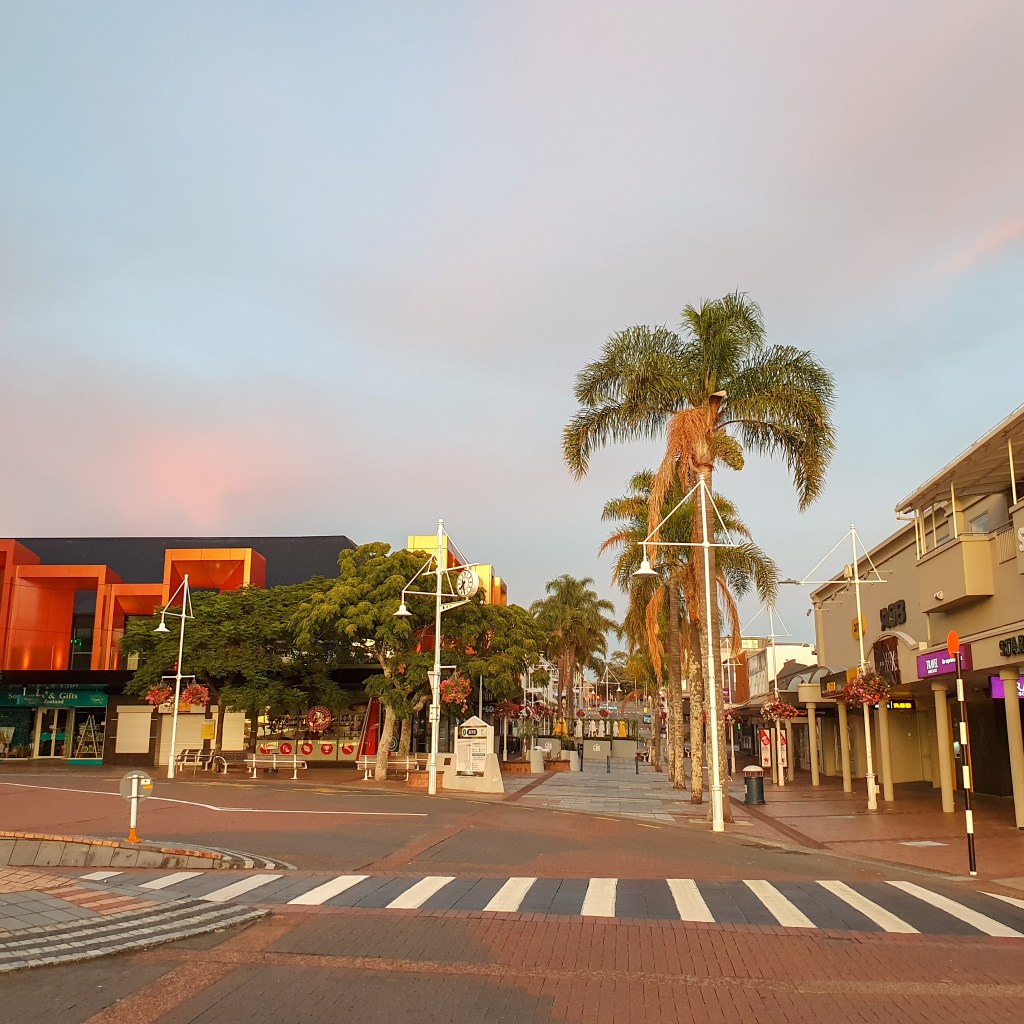
It’s about the feelings, the wairua (spirit), cultural identity and visual sensations that it can provoke, and because it redefines someone’s experience of the ‘everyday’. It can literally stop someone in their daily routine and make them think or change the way they view the world and themselves. For me, that is where the value is. Though for every public art that’s created, the same argument for many ratepayers is the amount of money councils spend on these seemingly “wants”, especially now, as many are financially struggling.
One such art form that provoked debate was Peata Larkin’s 7m-tall sculpture, which was unveiled in Tauranga’s Red Square at dawn last November. The $300,000 (NZD) installation is a circular, laser-cut steel sculpture.
The installation is a 4m-wide piece, orientated in line with the rising sun, a significant aspect in Māori culture, has an open design that encourages us all to appreciate it’s openness, and wander through and around it. Its shadow will cast patterns that change with the hour, symbolising the passage of time and the ever-changing nature of life.
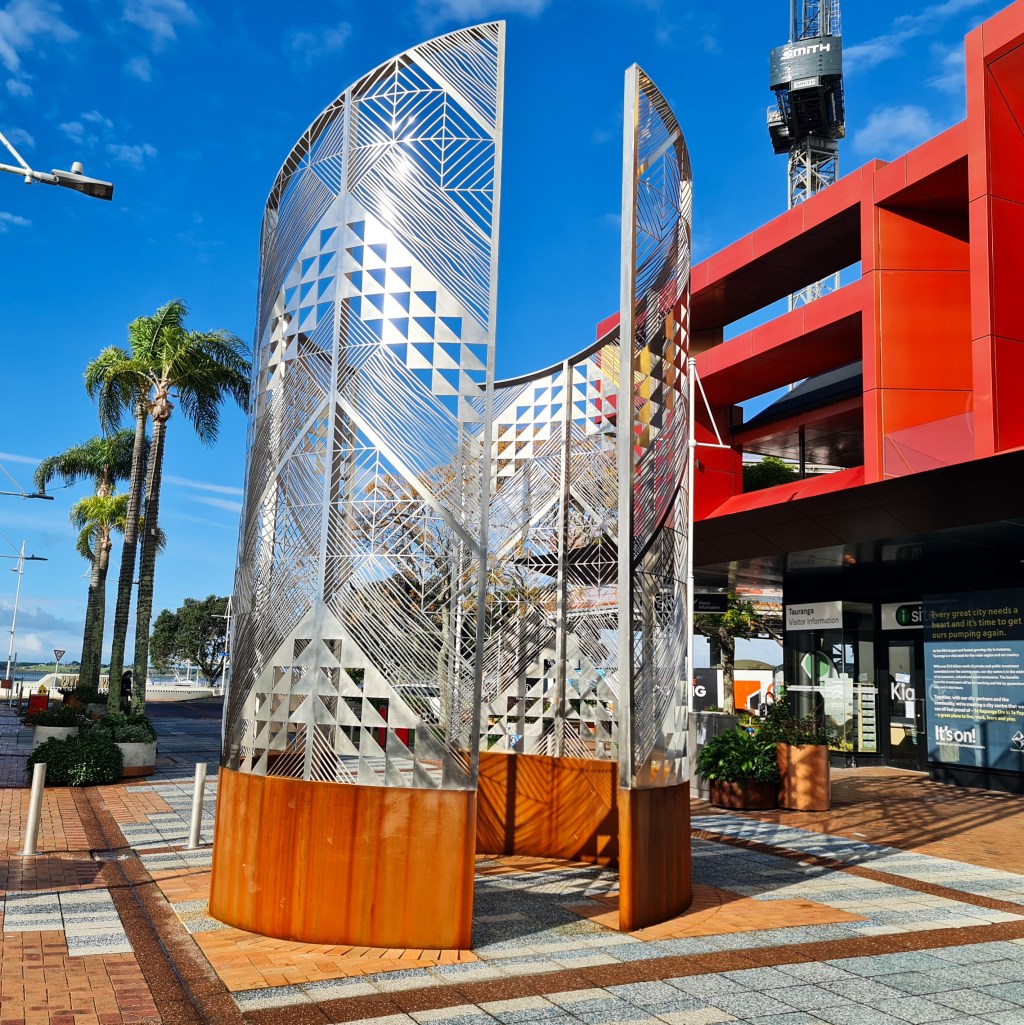
As is the case with all art, we experience it in so many ways. As the artist, Peata Larkin, is of Māori descent, she and many others could feel the wairua (spirit) and themselves in the space. Whether you’re Māori or non-Māori, we all share a connection to Aotearoa New Zealand, and this sculpture, named Rauhea, is a testament to that. The name was chosen to honour Rauhea, a tīpuna (ancestor) and a respected local kaumatua in the 1920s, thereby deepening the sculpture’s connection to the local community and its cultural roots.
The open circular design symbolised the spring that used to run down what is now Spring Street into the harbour. The base of the structure was made of Corten steel, which would rust and change over time. It was solid and represented a tree stump that anchored it to the ground, aligning with the meaning of Tauranga, which was safe anchorage.
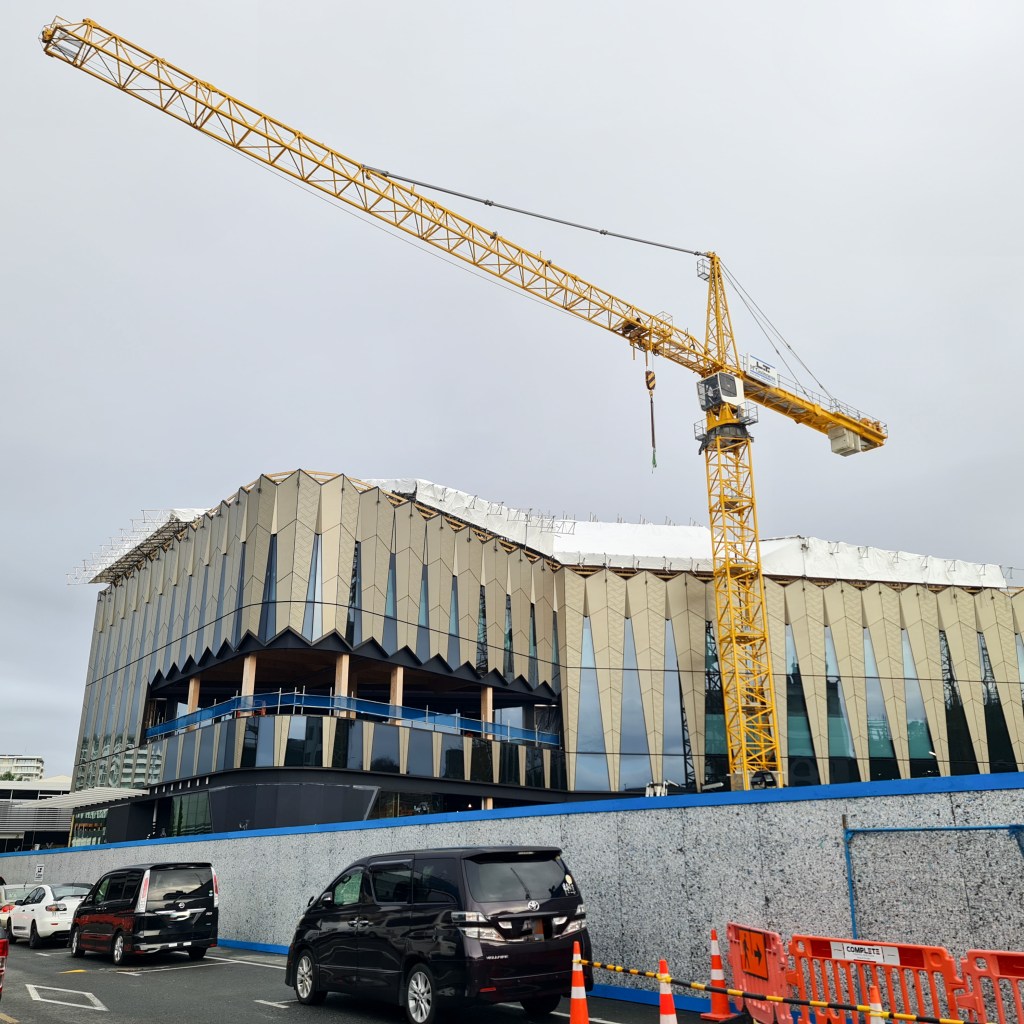
Fortunately, in the future, both locals and visitors can benefit from the Font Public Art Trust’s passion for showcasing outdoor art, so we can all enjoy the prospect of not just viewing, but actively engaging with more modern public art installations that capture the dynamism and diversity of the Tauranga community.
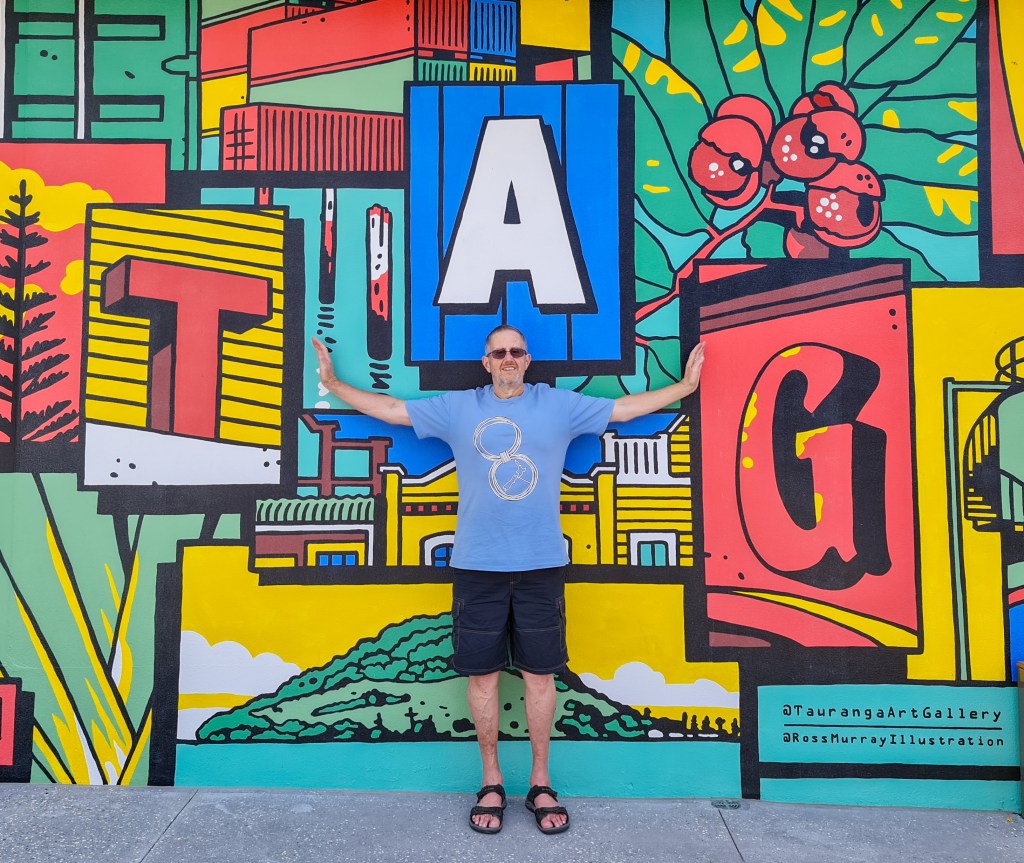
Another event I am looking forward to is visiting our refurbished Art Gallery, which reopens this November.

 Life at No. 22
Good artwork always adds to a city and that is a very interesting piece that I look forward to seeing next time I am in the Tauranga area.
LikeLiked by 1 person
I hope you both do have an opportunity to enjoy viewing the various art forms around Tauranga.
LikeLike
I wondered about the base. I like corten steel and the glass panels are lovely. Sending hugs to you and Les xx
LikeLiked by 1 person
The whole thing is made out of steel, Jo. Thanks for the hugs and a return hug for you xx
LikeLiked by 1 person
I need to look again. Not so great on my phone xx
LikeLiked by 1 person
Public art, whether it’s in the form of murals or sculptures always adds colour and life to a city. So many country towns we’ve been through recently on our travels are literally brought to life by artists creations transforming the streets. Love that last shot of Les!
LikeLiked by 1 person
Miriam, I agree the art brings vitality and in the hope of attracting more visitors, especially to those rural areas. We really enjoyed visiting the rural areas in Australia. I hope to do more travelling around Australia in the future. Bonus, it’s not far to travel😊
LikeLiked by 1 person
Very true Suzanne!
LikeLiked by 1 person
A fine advocacy – and good observation about cranes as sculpture
LikeLiked by 1 person
Thanks, Derrick.
LikeLiked by 1 person
I like it, but can understand why public art is contentious when public money is tight.
LikeLiked by 1 person
There is no way any council will keep locals happy no matter how hard they try. Money is always tight and it all depends on who you ask.
LikeLiked by 1 person
I agree with you about public art, in that even the more controversial pieces that not everyone likes provoke a debate. There are occasionally pieces commissioned that NO ONE likes and it’s arguable they were perhaps a waste of funding, but on the whole I think money spent making a community more attractive is money well spent. It brings people together, gives them a sense of belonging somewhere and can deter anti-social behaviour. As for this sculpture, I liked it when I first saw your photo and liked it even more when I read all you had to say about the significance of the various design elements.
LikeLiked by 1 person
Well said, Sarah. Anything that creates conversations while out walking and exploring a city is money well spent. Connecting people from all sectors of our communities is so important now than ever before.
LikeLiked by 1 person
I love that sculpture and agree with you about the value of public art, even in times of hardship. Bread and Roses as the old song says.
LikeLiked by 1 person
Beauty and the necessities of life (dignity of life) pretty much sums it up. I think the sculpture is stunning too.
LikeLiked by 1 person
Public art seems to be a universal around the world. I enjoy seeing whatever a community chooses to display knowing someone cared enough to make it happen. Therein is the magic of it. Sharing.
LikeLiked by 1 person
Sharing is a magical component in our lives that needs to be regularly nurtured. I love creativity and learning/hearing how others view a piece of art. Especially abstract art.
LikeLiked by 1 person
It makes me sad when people don’t appreciate art, even when it is public and costs them little (compared to the overall value). They are not introspective and seem to miss the point that life is really not just about food, clothing and shelter. Humans have an incredible ability to create and be nourished by abstract representations and beauty.
LikeLiked by 1 person
Well put, Eilene and as Anabel pointed out “Bread and Roses”. When I visit a new city/town and I see outdoor art with places to sit and appreciate the space, it tells me more of who lives there than a building will ever do.
LikeLiked by 1 person
What a beautiful sculpture! I love how the shadows with constantly evolve as the sun works its way across the sky, throughout the seasons.
LikeLiked by 1 person
That’s another aspect of it that I had forgotten to mention. Thanks, Janis for pointing it out.
LikeLike
What a great idea having art that you can walk through as well as around. The changing patterns on the ground will create their own art work too. I have fond memories of the old art gallery so look forward to one day visiting the new one.
LikeLiked by 1 person
Yes, it will be interesting to see how much has changed especially with new people at the helm. You’re right, Pauline there aren’t many sculptures that allow us to walk through them.
LikeLiked by 1 person
Two things I always do if I can, walk up a hill to see the land, look for the art to see the people
LikeLiked by 1 person
Ruth, I couldn’t agree more. Well, you can do both of the things here, climb Mauao and view various art.
LikeLike
Very striking. X
LikeLiked by 1 person
Thanks 🙂
LikeLiked by 1 person