
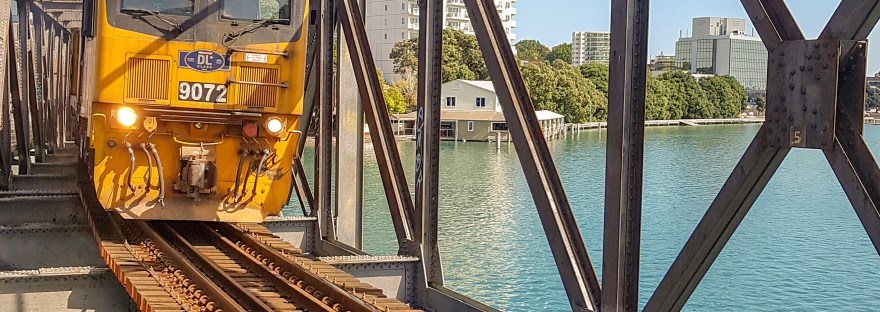
Now, if I were a full-on trainspotter, I would’ve been salivating with pure bliss last week as Tauranga had the pleasure of welcoming the heritage diesel locomotives DC4818 and DBR1254.
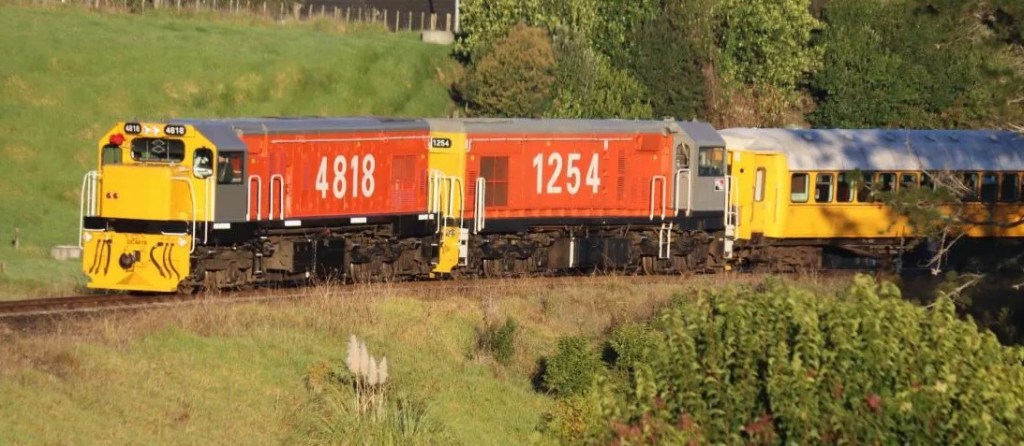
It puttered along the rail lines, taking in the beautiful coastal and estuary views, usually reserved for freight trains and their drivers. However, on May 2, 2026, for the day only, many locals and visitors had the pleasure of riding a heritage locomotive.
This one-day excursion was courtesy of the Glenbrook Vintage Railway. Unbelievably, it sold out in two days. Were there more people than me who missed travelling via rail?
Many of us hope the idea will catch on once again. Like it did years ago, until the almighty Government said, “Down the track you go,” and those trains never returned.
Now that we are in the midst of a fuel shortage, the idea of frequent trains to transport people in our congested city is building momentum. I’m hoping that it doesn’t run out of steam.
A Tiny Slice of Automotive History

During the 1920s, New Zealand passenger trains carried more than six million tonnes of freight and about 28 million passengers country-wide each year. Railway travel was a familiar part of daily life.
Trips were made between major centres for work and social events. Children also took the railway to get to school.
In 1928, the Taneatua Express was established to provide a link between Tauranga and Auckland. It travelled to Te Puke daily. The service to Taneatua was cut in 1959 due to dwindling traffic, but continued between Te Puke and Auckland until 1967, when it was withdrawn. This service meant that people could actually travel by land to Auckland instead of going by sea. Many local historians have noted that it was a significant part of the railway’s history.
Rail passenger numbers declined in the late 1920s, with New Zealanders turning towards travelling by road and air.
After long periods of fluctuating fortunes for passenger rail, including a fleeting service through the Kaimai Tunnel from 1978, the Kaimai Express was introduced. It was a long-distance passenger train operated by the Tranz Scenic division of KiwiRail, then known as Tranz Rail.
Eventually, the Kaimai Express was restarted. It was a very popular direct service introduced in December 1991 using Silver Fern railcars, taking 3½ hours to Auckland. It ceased on October 7, 2001, due to being uneconomic.
Reality
As with most “things” in life, there are many reasons for and against the return of defunk services. For me, New Zealanders’ obsession with owning a car or two, and the stigma surrounding public transport, could be among the most obvious reasons it hasn’t taken off. As with the rail carriages years ago and the buses I spot regularly, there is an issue with usage, which leaves many running with no passengers at all. This results in the services becoming commercially unviable.
I quietly whisper, get rid of the buses and introduce electric trains.
I personally miss commuting via trains, just absolutely love the relaxing way of winding down in between destinations and taking in the various vistas along the way. To be fair and realistic, the countries where we did enjoy these services had user-friendly infrastructure and a population large enough to pay for it, whereas New Zealand does not.
Though a wannabe romantic trainspotter girl can dream, can’t she?
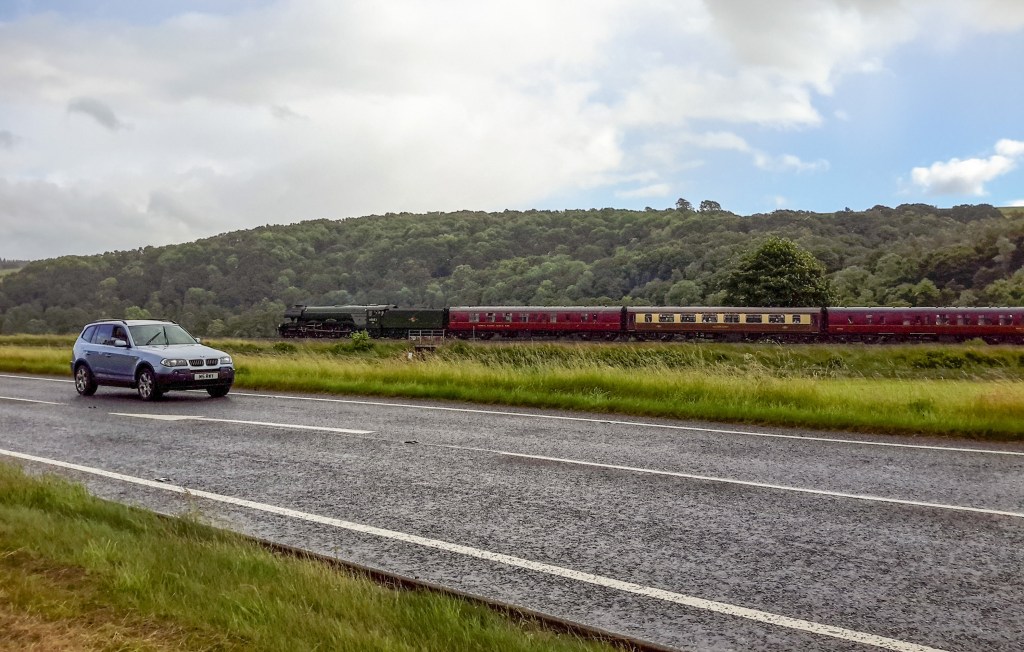
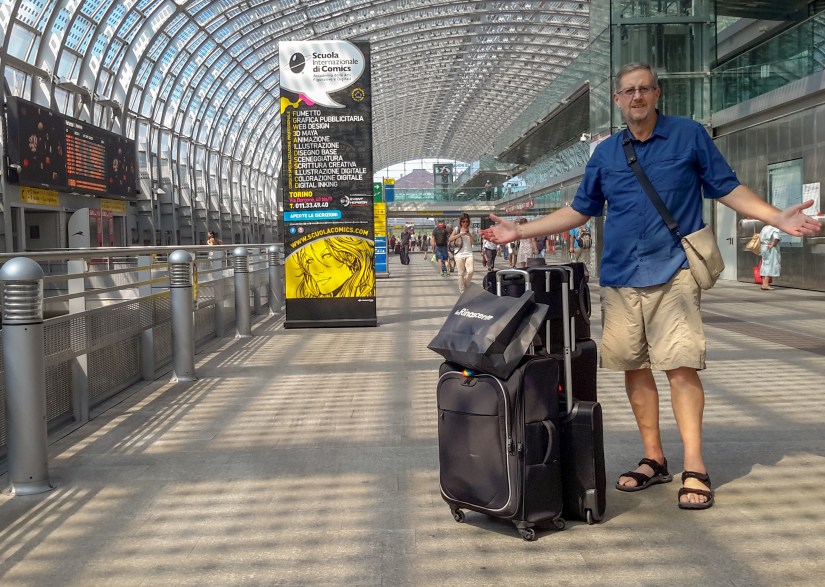
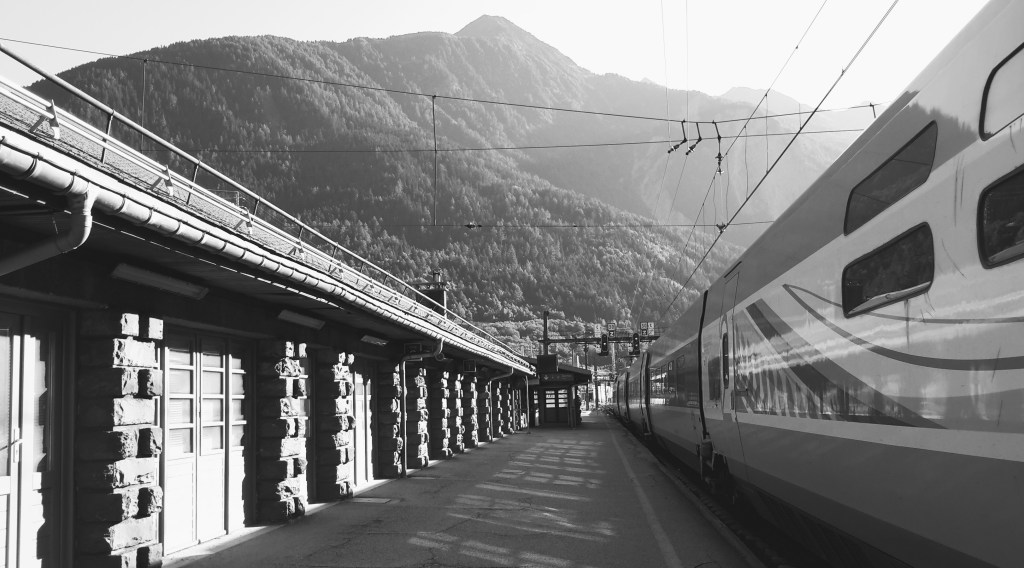
Overseas Travel

 Life at No. 22
Love that last shot! You’d have caught the next train, Suzanne, worst case scenario xx
LikeLiked by 1 person
Thanks very much, Jo. Not so sure the trains were so frequent in that area though I would’ve sorted it one way or another x
LikeLiked by 1 person
Whereas I’m sitting watching a train go past every few minutes while I have my breakfast, here in the centre of Leeds xx
LikeLiked by 1 person
I thought you must’ve been visiting family as no Monday post😊
LikeLike
Sorry, I thought I said that on last Mondays post xx
LikeLiked by 1 person
You most probably did Jo, and I didn’t see it. All good x
LikeLiked by 1 person
I’m about to board a train to Tavira from Faro, on the subject of trains. A long day xx
LikeLiked by 1 person
Take care, Jo, and it’s amazing what you lot get up to while I’m sleeping 😉x
LikeLiked by 1 person
I love a good train ride too. Unfortunately, we live on the road to nowhere and the train service stopped maybe 50years ago. Many locals would love to see it back operating again, but it would be even more uneconomical than it was 50 years ago. Oh well, it’s a slow and winding bus ride for us…
LikeLiked by 2 people
The hot climate and maintenance costs would be a killer for more rail services in rural Australia. NZ can generate more electricity, so having electric rail in cities to me is a no-brainer. We need a bigger population to afford it or a whizz kid to organise our infrastructure. Long bus trips aren’t in the same league as trains, are they?. We will just have to do with what we have until that whizz kid appears.
LikeLiked by 1 person
Yep, I think our biggest problem is big country, small population….Oh, and the lack of politicians with Vision!
LikeLiked by 1 person
You have the same issue with politicians as we do. Where on earth have all the wonderful orators gone? A skill lost over generations? As I am not one, I appreciate them even more.
LikeLiked by 1 person
I think I am more interested in the ‘doing’ than the ‘talking’. We seem to have plenty of talkers in Australia and very few who will actually follow through! Bah humbug!!
LikeLiked by 1 person
True, though sometimes the orators know how to get things done. Definitely need more doers than talkers.
LikeLiked by 1 person
What a wonderful post Suzanne. I absolutely love travelling by train too, there’s just something romantically nostalgic and slow paced about viewing life and the countryside through a train window. Melbourne currently has free train travel for seniors but ironically we’re not in Melbourne anymore! Anyway, love your pics and post. Have a great month. x
LikeLiked by 1 person
Two things to love and enjoy are trains and Melbourne even better when combined. Thanks very much, Miriam and you have a fun month x
LikeLiked by 1 person
The challenge with public transport is that you need to either charge enough to cover the cost of running them and only run enough to make the service pay, based on current usage, or make so cheap and frequent that people can’t afford not to use it. We go for the former.
For me as a working user, this is expensive and not very convenient. When I was working (in Wellington), the trains came every 20 minutes and were packed solid. The return trip, including walking to the station with a safety margin to not miss an early train, then standing in the weather until it arrived, took about 2:20 and cost $12. By road, If I went in early and left early, the trip was 40 minutes return including a 2 minute walk between the car and the office. Fuel and running costs were about the same as the train cost, and the $20 for the parking was a small price for getting back over an hour and a half of my time and traveling in comfort, not in a sardine can.
Now that I am retired and have more time flexibility, the public services are usually a viable option, especially with the free off peak for seniors.
LikeLiked by 1 person
Great reply, thanks David. Yes, there is no obvious solution to our traffic woes and the general public using available transport. I’m wondering when the free transport will come to an end. Silly me it’s election year no political party is going to mess with that one.
LikeLiked by 1 person
Love trains and especially diesel trains!
Returned in March from 6 weeks in Japan and the trains there are super efficient! We travelled everywhere by local rain (only 2 bullet trains) and buses. I only wish in Brisbane we could get public transport As efficient!
Great photos, Suzanne!
LikeLiked by 1 person
Thanks, Nilla. You’re right, Japan has got incredibly efficient transport. It was easy to spot Les in Tokyo train station.
Your travels there would’ve been amazing.
Brisbane transport is great compared to here. Lovely to hear from you.
LikeLiked by 1 person
Really? Hailing from Sydney (a very long time ago), Brisbane’s public transport isn’t great. We’ve had 50c fares for a while now.
Second time in Japan as it’s such a great country to explore and easy to get around. It’s getting busier as I noticed a marked increase in tourists from the 2023 trip.
LikeLiked by 1 person
Fascinating history. Re your calculated risk I just have to send you this link: https://derrickjknight.com/2020/09/09/scratching-and-suckling/
LikeLiked by 1 person
I can’t get excited about trains in the train-spotting sense, but I like a train journey. Locally I will get the train or subway if possible rather than a bus because they are more reliable, even though I get the busses for free. Overall, public transport worked much better here before it was deregulated and all the companies compete for profit.
LikeLiked by 1 person
Why do those in authority try to fix what doesn’t need fixing. Then, down the line, some bright spark will reinstall it and call it “a new idea.” This phenomenon usually happens during the election year.
LikeLike
Oh you cynic – surely not 😉.
LikeLiked by 1 person
Haha, born a cynic when it comes to politicians 🤣
LikeLiked by 1 person
This was an interesting read. I guess I take the option to travel by train for granted, as we have such a good network here (even if it can by expensive and not always 100% reliable). I can see that trains might not be so practical in a larger, less populated country, but I’m curious why there would be a stigma surrounding public transport?
LikeLiked by 1 person
Sarah, I personally don’t mind taking public transportation. I think it’s a combination of the convenience of a car and status position, as in I can afford a car and not wanting to share space with undesirables. A generalisation based on a few throwaway comments from people. I used to love using London’s public transportation.
In my twenties, I wanted the experience of riding in a black cab, gave the driver 3 pounds, and told to drive until it ran out. Funny, now I think about it. The driver was very obliging.
LikeLiked by 1 person
We have some train trips in Italy booked for June, looking forward to seeing how they do things
LikeLiked by 1 person
Oh, that will be fun, though sometimes the rural services aren’t so reliable. I’m sure you both will love Italy. What’s not to love?
LikeLiked by 1 person
I enjoy rail journeys as I can usually read a book on them, unlike on a coach. Except for the Virgin pendolino which made me nauseous. But commuting between Doncaster and Sheffield for several years wasn’t fun as the trains were packed and not always on time. And here train travel is expensive.
LikeLiked by 1 person
It’s very easy for me to romanticise train travel as it’s been years since we were over there doing it. Though mainly, it was a novelty and not something we had to do regularly. For the last year or so, we hired a car for the months we were travelling. Lovely for me as a passenger, more challenging for Les 🙂
LikeLiked by 1 person
You have taken me back to my youth. As kids, we loved train spotting.
LikeLiked by 1 person