
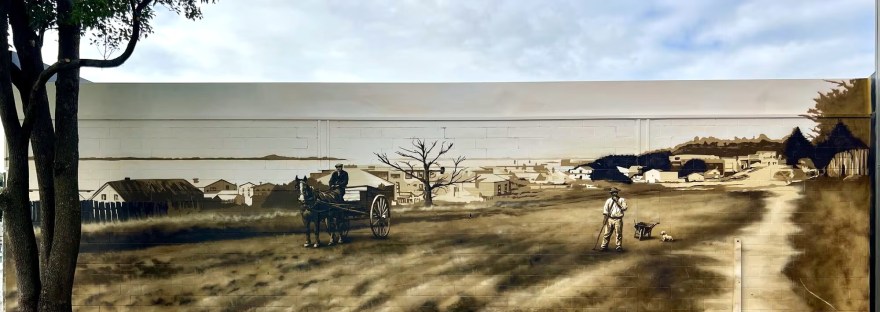
First, the park’s name is a bit of a misnomer, since that old tree was not, in fact, an Aspen; it was a Cottonwood. It had more grandeur in the city landscape than even the navigating trees planted on the grounds of The Elms.
The cottonwood seemed to have had a lucky break for many years, as many locals had a love/hate relationship with it. Until, in what some have written was almost an act of defiance and retribution, the tree dumped a substantial limb on a car. No one was hurt, but the tree had sealed its own fate. Down it came in 2011. A block piece of that notable tree lives within the walls of the Library and will no doubt head over to our new Library in Sept/Oct this year.
The tree’s origins are uncertain. Romantic theories aside, the armed constabulary likely planted it, as they carried out many public works in the late 1860s. This is because that area is linked to the 19th-century military heritage of the 1864 Gate Pā/Pukehinahina era and the land wars.
Aspen Reserve itself sits on land significant to both Māori and early Pākehā settlement, once part of a large cultivated area and a place where people often tied up their horse and cart while visiting the Post Office.
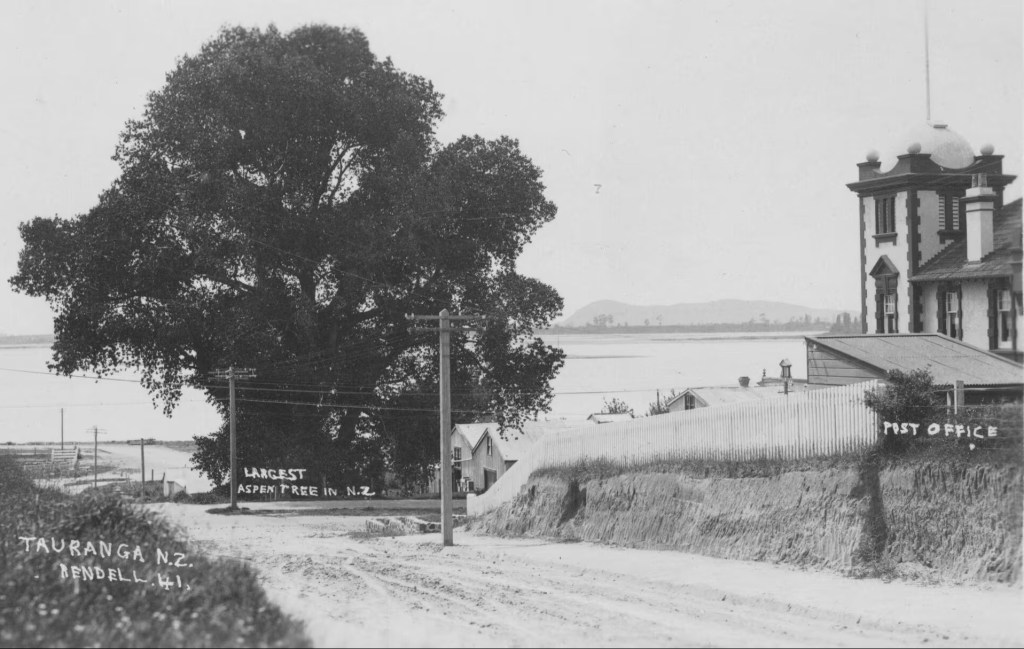
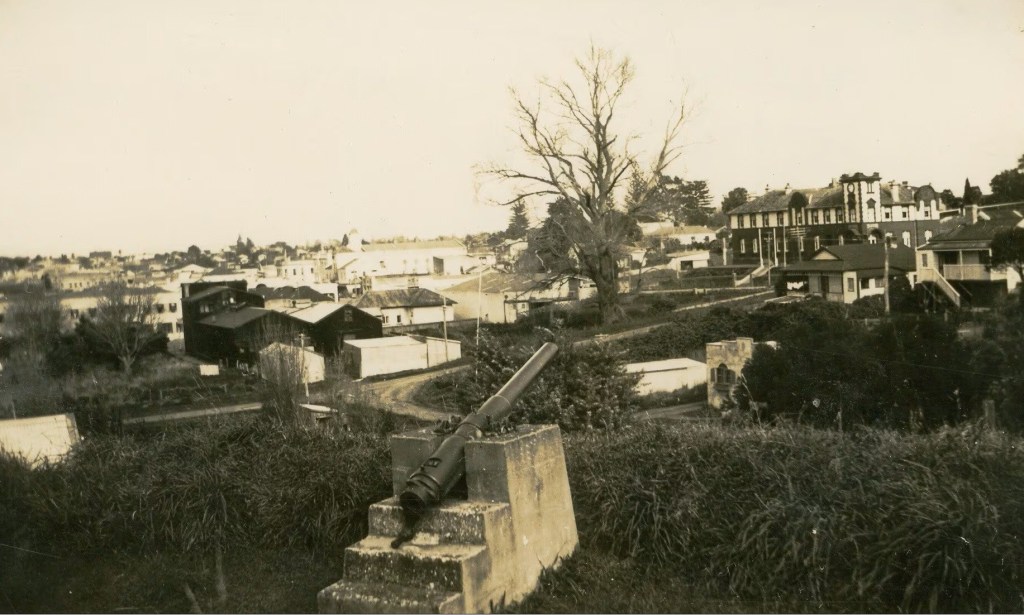
Some of that history includes the land being used for food cultivation for the community. I immediately thought how wonderful that was, and at the same time, wondered why we, as a community, don’t install more gardens for people to graze from? Yes, I know the limitations of such a pie-in-the-sky idea. Even introducing more fruit trees has got to be a positive? I recall seeing numerous citrus-lined streets around Spain; it gave me the impression that the place was loved by it’s community.
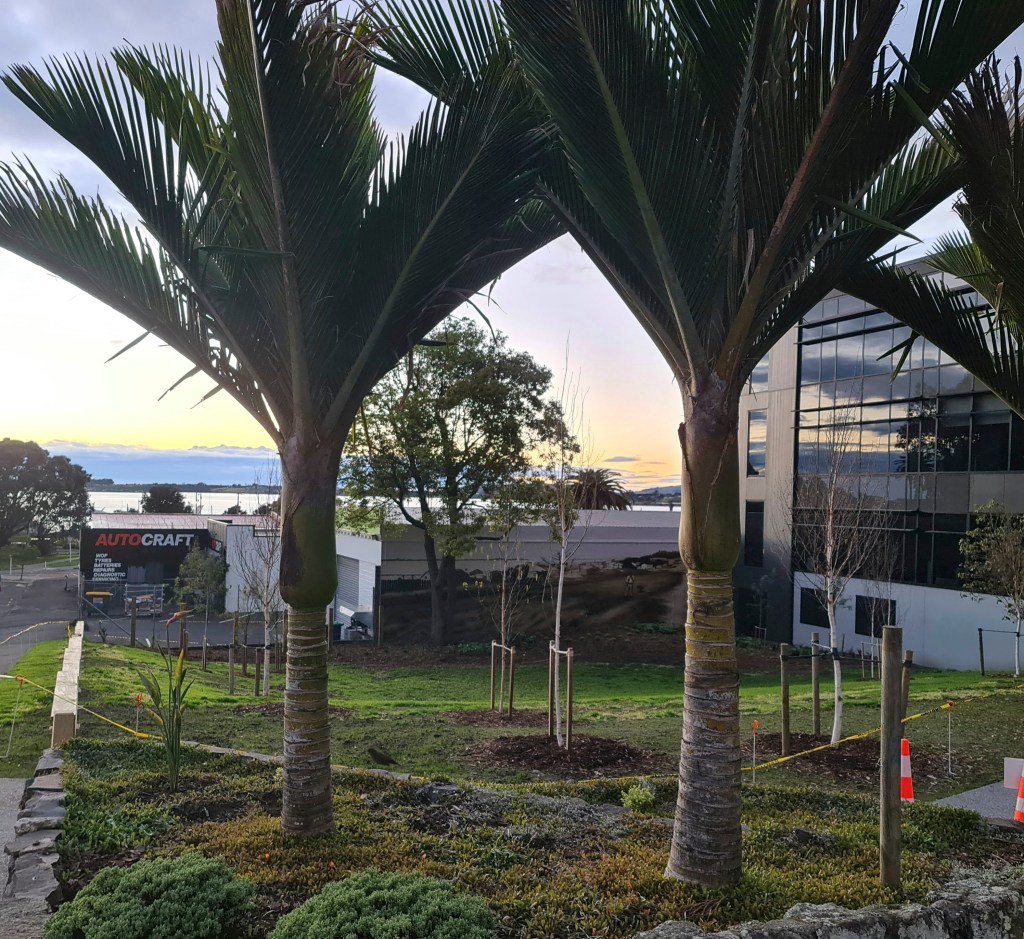
As it is today – August 2026
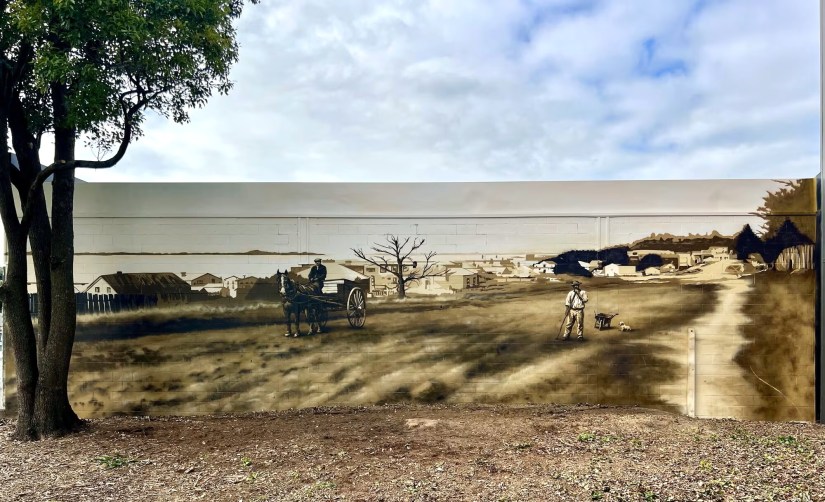
Nowadays, the work being done is to create more green spaces, a sanctuary-style space, if you like, and to reflect our history in our inner city. The recent installation of a large mural by artist Graham Hoete depicting an 1880s Tauranga street-building scene based on a historic photograph of Willow St will prompt those reflections.
I applaud this, and I’m sure office workers and those of us who live here will enjoy the space, whether sitting in it and even playing chess on one of the tables to be installed, or just admiring it as they walk past.
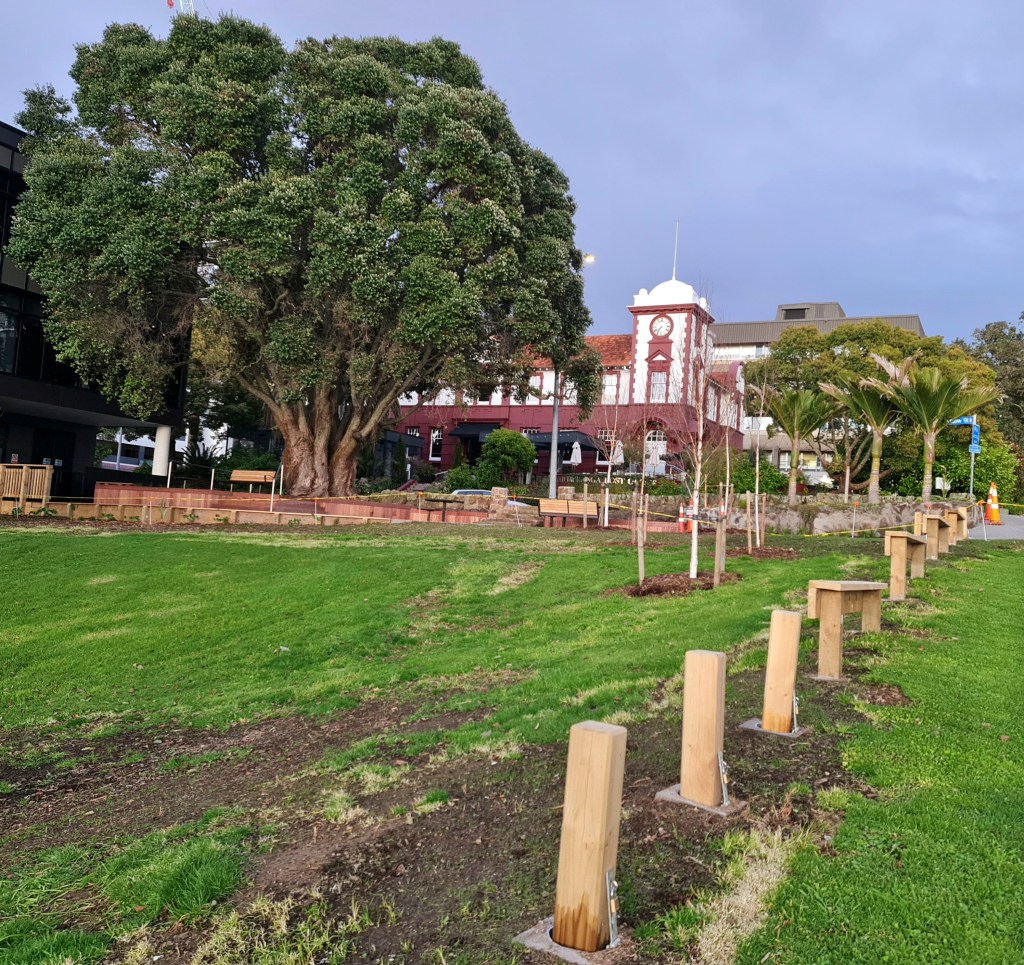
Our nearly completed green space for all to enjoy, sitting in the partial shade of a tree or basking in the sun, while away for a lunchtime hour, a small jazz concert or a 15-minute sit-down between wandering around our beautiful harbourside city space.
Telling local stories through public art.
The image below and the cover photo are of the mural at Aspen Reserve, a reproduction of a 19th-century photograph by multidisciplinary artist Graham Hoete.
The image shows two Māori men working to form what is now Willow St – one seated in a horse-drawn cart, the other standing with a wheelbarrow and spade, a small dog by his side.
Local historian Buddy Mikaere has mentioned in several publications that the men were members of the Ngāi Tamarāwaho hapū of Ngāti Ranginui and were among those who carried out major infrastructure work in early Tauranga.
So, a lot of work has gone into this small patch of land over the years, and today it will be designated as a small reserve for all to enjoy. In my opinion, communities can’t have enough green spaces around a city.


I always find it fascinating to see what, in my experience, has always been a modern city environment as it was when NZ was first being settled.
I was also surprised, and pleased, to find a very simple green park with some large trees in the centre of one of the suburban blocks near where I live in Lower Hutt, with access from several streets and many of the surrounding houses – great for the kids I thought. Then I spotted a small communal veggie garden tucked away in a corner, most of which seemed to be in use, although I couldn’t explore too much because someone was using the garden as a backdrop for what looked like a foodie, YouTube post. The things I find when I go for a walk – and I have lived here for over 20 years before I found this area.
LikeLiked by 1 person
What a lovely discovery and it’s wonderful when you can still find gems in a place you’ve lived in for years. Thanks for sharing.
LikeLike
I love a good green space too and unfortunately in Aus, it seems to be the last consideration or minimised in any residential development plans. No wonder people are so unhappy living in big cities! Melx
LikeLiked by 2 people
The older suburbs I grew up in here in Wellington (NZ) tended to have larger sections, local shops, sports greens, playgrounds, and other places for kids, and adults, to get away from the house. From what I have heard, in much of post-WW2 America, when cars were becoming a significant part of life, there was very successful lobbying by the vehicle manufacturers to move to residential areas being single zoning – ie large areas of houses with no shops or recreational areas – meaning people needed to drive everywhere – hence buy more cars. Unfortunately, America’s post-war position as the trend leader is now being used by councils to promote this housing-only model, along with very small sections, multi-storey blocks of small apartments (a style that was “state housing poverty accommodation in the 1950’s), as the “aspirational housing style for up-and-coming executives”, and seems to dominate most new suburbs and in-fill construction around the cities (including my suburb). In practice it is all about the council getting more rates for the same land and having less to look after.
I am very lucky that I still have a large park and 20km of bush-lined river bank within easy walking distance.
LikeLiked by 1 person
Not everyone is unhappy and as I have lived in the country and in a city I can see the merits for both. At this stage of my life being close to medical facilities, entertainment and places to walk/cycle are more important. Though Tauranga is hardly a big city.
LikeLiked by 1 person
This will be a great asset to your community. Everyone needs green spaces! Love the mural too.
LikeLiked by 1 person
Luckily, for us, we have a few green spaces that are well utilised. Regularly for market days, entertainment and for those that just want to sit and relax to enjoy the harbour view.
LikeLiked by 1 person
Fascinating history. Our House was once a post office visited by people with horses and carts
LikeLiked by 1 person
That’s wonderful and many places that were once churches are now homes. Years ago, Les and I would’ve loved to renovate an old building in the UK. Then decided we enjoyed travelling too much.
LikeLiked by 1 person
I completely agree with you about the importance of green spaces in cities and it’s good to see this area being developed for you all to enjoy 🙂 And the mural is excellent!
LikeLiked by 1 person
We have some very talented artists in NZ and a council who can see the artistic merits of murals in our city. Across the road from our place is another green space and it’s fun to see and hear kids enjoying their time playing outdoors. Though no established playground as there’s one down on the waterfront.
LikeLiked by 1 person
Hi. My suburban area doesn’t have enough green spaces. Nowhere near enough, actually. Nature has been subdued around here.
LikeLiked by 1 person
Hopefully, someone with power and vision in your area changes that philosophy of not having enough green spaces.
LikeLiked by 1 person
What a wonderful story about one small corner of Tauranga! I loved the history of that cottonwood, and your idea about planting more fruit trees really resonated with me. I need to plant few myself 🙂
LikeLiked by 1 person
Apologies for the late reply it’s due to your message going into my spam folder. I hope you’re able to plant some fruit trees.
LikeLiked by 1 person
I will be able in spring 🙂 too cold and dump already here in Latvia.
LikeLiked by 1 person
Love the black and white ‘look back’ at how it was, and that mural looks very realistic, Suzanne. We have quite a large designated area for growing fruit and veg. You have to sign up to obtain a plot and it’s the other side of town from us so I’ve never seriously thought about it (and I don’t have green fingers), but it’s a good idea xx
LikeLiked by 1 person
We have community gardens around Tauranga, and we belonged to one before Les became too unwell. With the “financial crisis”, I think much of the produce will be snatched by non-gardeners, which was an issue when we did it previously, so I’m reluctant to invest my time and money in one at the moment.
LikeLiked by 1 person