
In life, there are many things and people from whom we can draw inspiration.
Today, my focus is close to home and literally less than 500 steps away, where nature has adjusted to the busyness of urban life.
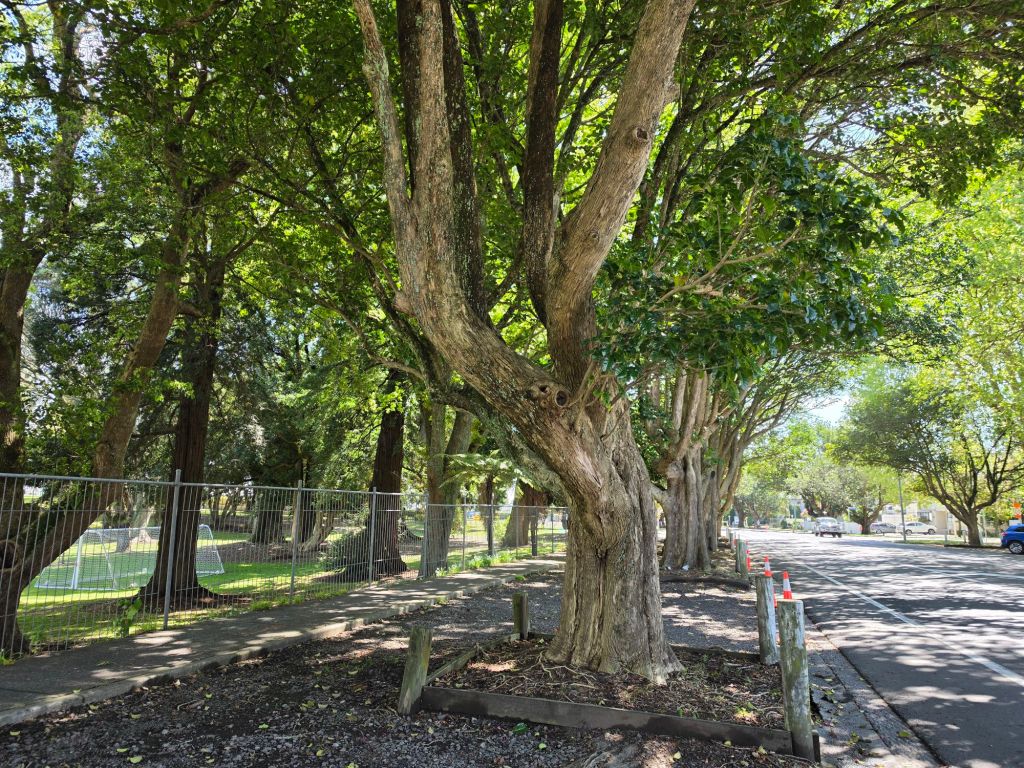
It always amazes me how many things I’ve taken for granted around me while living in central Tauranga city, especially the history behind our magnificent old trees. How many of you walk past huge trees and think about who planted them, and perhaps why?
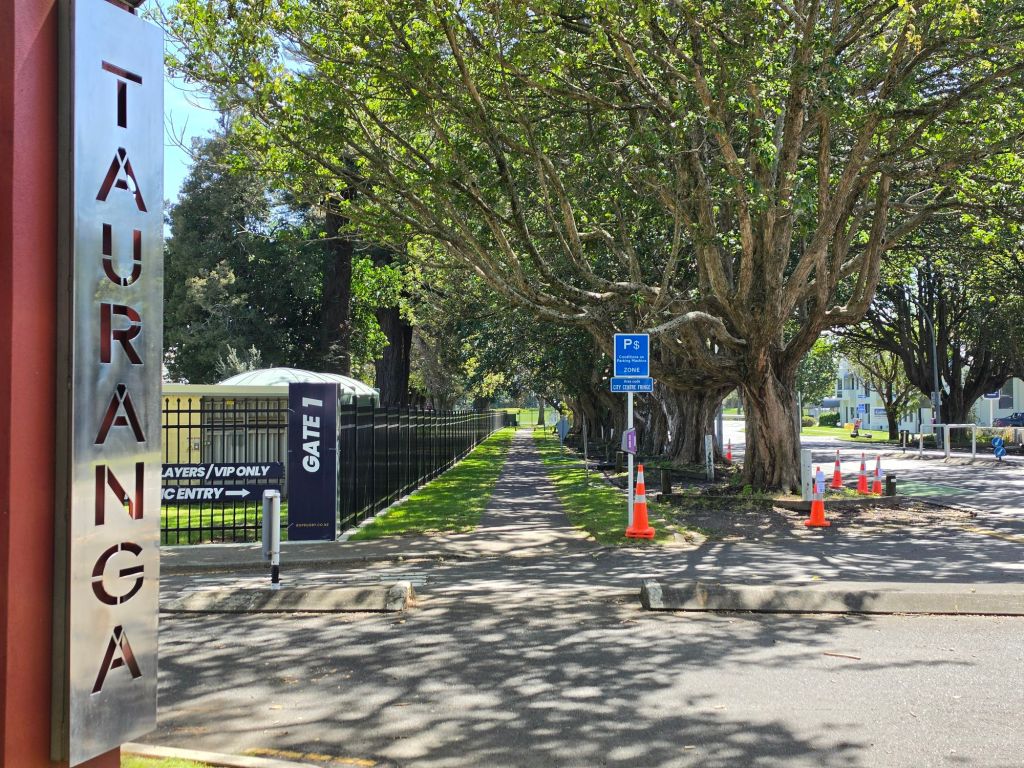
We’re surrounded by a variety of established trees, and one particular iconic line runs along the northern side of Cameron Road, right alongside the Tauranga and Wharepai Domains.
These beauties are pūriri (Vitex lucens), and we are fortunate to have an avenue of them down Cameron Road and beside the Tauranga Domain.
A brief history of the Pūriri tree
This stand of trees was soon referred to as the Pūriri Avenue
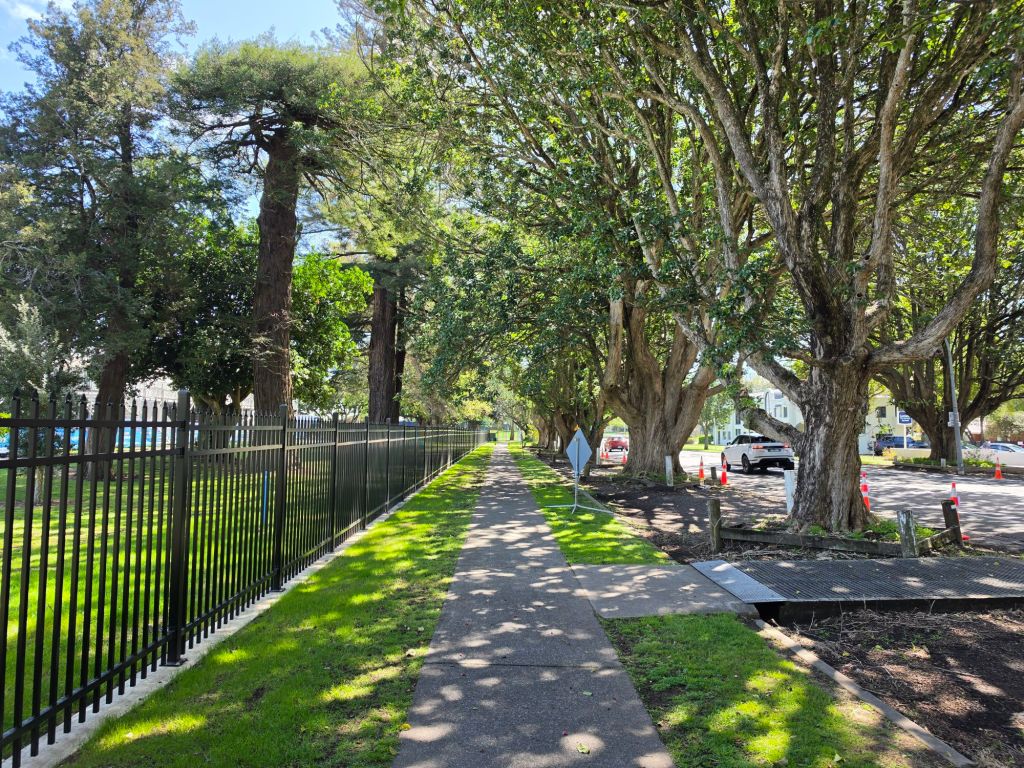
The idea for this avenue of trees began when the Tauranga Beautifying Society received approval to plant pūriri (Vitex lucens) in July 1927. They planted the eastern side of the road, followed by the western side in 1932; they needed replacements in 1934 when some of the originals did not survive.
In 1947, a large number of giant bright green pepe-tuna (Aenetus virescens | pūriri moth | ghost moth), New Zealand’s largest moth, were reported in downtown Tauranga. These are New Zealand’s largest moths, found only in the North Island, and their wingspan can reach 15cm. Their caterpillars live in leaf litter, eating fungus and rotten wood for about 2-3 months, then climb a tree and create a 7-shaped burrow where they can grow up to 10 cm long over up to 6 years. The caterpillar then pupates, and the moth emerges from October to December, living for a mere 48 hours to mate and lay up to 2,000 eggs on the forest floor. Several sources suggest that the moths most likely seen at streetlights are the males. Sadly, these numbers are no longer seen, perhaps due to deforestation and pesticide use.
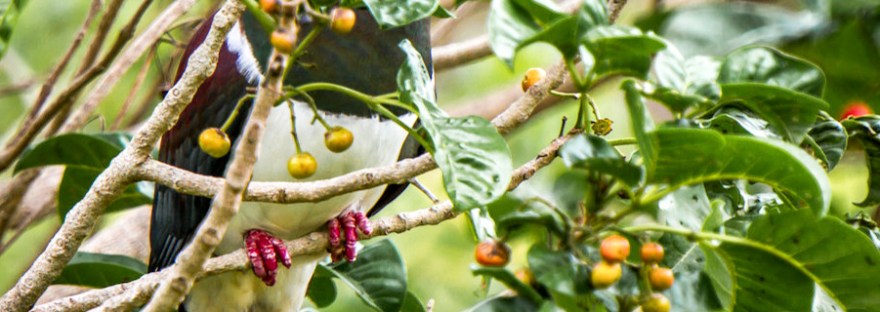
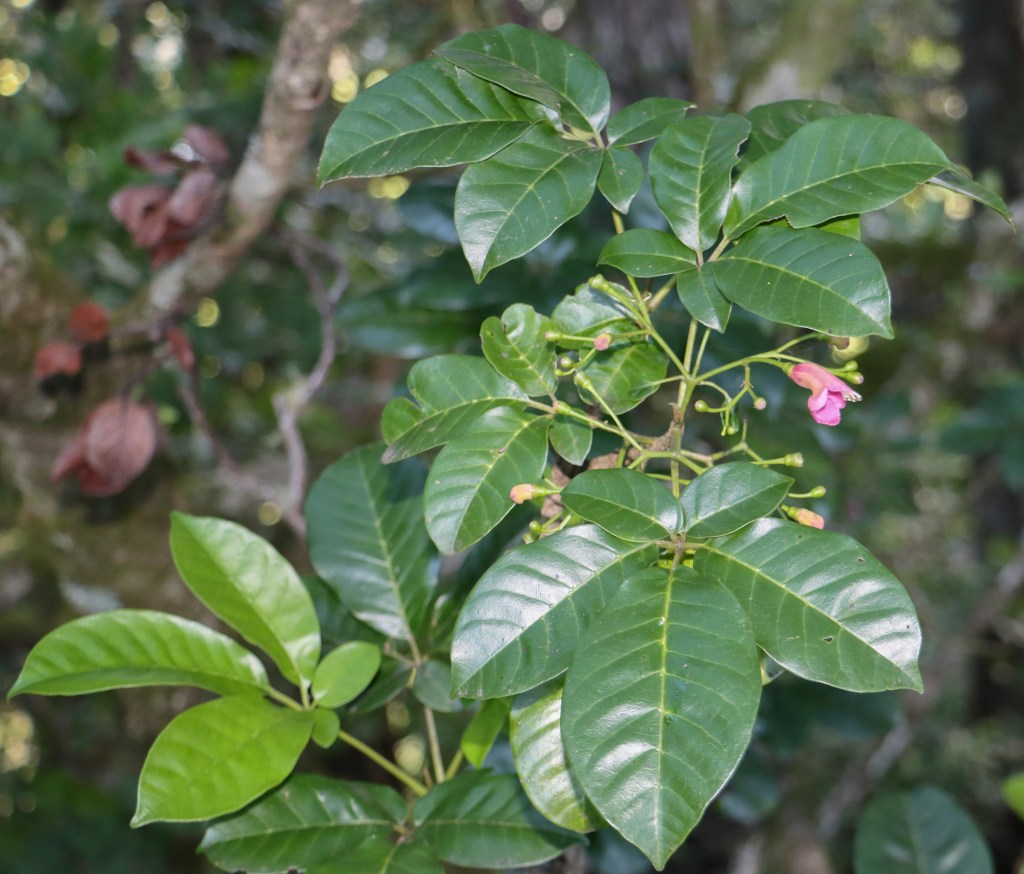
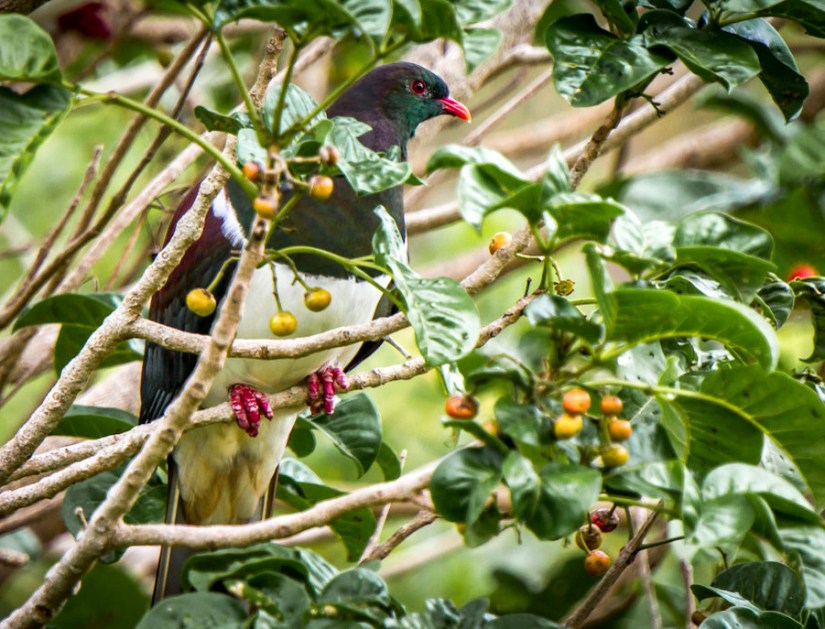
Pūriri trees can grow up to 20 metres tall. Their lovely, green, polished-looking leaves have wavy borders and are palmate, meaning they resemble a hand with fingers spread, with three to five leaflets, or ‘fingers’, attached. Colourful, 3 cm-long reddish-pink tubular flowers are mainly seen in winter; this author observed them on the Tauranga stand of pūriri in June 2021, along with bright red berries. Tūī especially love the flowers for their nectar, and kererū (native pigeon) eat the fruit, helping disperse the seed. The pūriri is self-fertile and seems to grow best in the upper half of the North Island. They can also live to a great age, as seen in a massive pūriri tree, ‘ Taketakerau ‘ at Hukutaia Domain in Ōpōtiki, estimated to be around 2,000 years old.
Māori especially valued pūriri wood for its longevity, using it for garden tools and weapons, and later settlers used it for railway sleepers, shipbuilding, and house blocks. The wood had other uses, such as creating hinaki (eel traps), as it was one of the few native timbers that would sink. Later, people discovered that the heartwood could be used to make a bright yellow dye to add colour to muka (flax fibre).
Pūriri were used as burial trees, with a leaf infusion used to wash the dead and a mourning coronet of leaves worn during tangi.
Rongoā (traditional Māori medicine) has several applications for pūriri, especially as a remedy for rheumatism. People boil the leaves in water to make an infusion to treat backache, joint pain, sprains, ulcers, and sore throats. The leaves’ strong antiseptic qualities mean they can be made into a balm to stop infection in wounds and cuts.
Today, this beautiful stand of hardy pūriri trees brings many benefits to our community, and as mentioned, my admiration for these trees is immense, and we are especially fortunate to have so many healthy specimens here in Tauranga.


Wonderful. You have to wonder what these old trees have seen through their lives. It’s like when walking through streets where royalty once lived, you almost have to pinch yourself.
LikeLiked by 1 person
I pinched myself all the time while exploring Europe and the UK 😉 I remember the walks we took through Sherwood Forest and other places, and some of the trees were 1,000 years old or more. Astounding.
LikeLike
I am also very lucky in the Hutt Valley with the number of established trees, both in public areas and in people’s gardens – although the latter are suffering from the council’s enthusiastic push for cheap, multi-unit in-fill housing, with developers buying up several adjacent sections, scraping the land clear and building 10 – 20 mainly small, apartments in 2 story blocks.
LikeLiked by 1 person
Nothing new about the government trying to establish more housing though it’s concerning trees have to pay the price.
LikeLiked by 1 person
Trees and open spaces / gardens both. Unfortunately there seems to be a lot of cultural pressure to follow the unhealthy American approach of living “safely” indoors, and that having a garden is old-fashioned. A pressure that, from what I have heard from Americans themselves is partly driven by the horrendous cost of any medical treatment required for kids being kids and challenging themselves, and partly by a legal system that treats any “learn by experience” mishap as a criminally irresponsible parenting.
Also, developer infilling means that we are losing a lot of the older, and hence cheaper, housing that is in the price range for first home buyers and lower-income renters.
LikeLiked by 1 person
That’ll a lovely avenue of what sound to be very useful trees.
LikeLiked by 1 person
It was certainly news to me that the Pūriri had so many medicinal purposes.
LikeLiked by 1 person
They are beautiful. How wonderful to have so many, Suzanne. Thanks for sharing the history xx
LikeLiked by 1 person
You’re welcome, Jo xx
LikeLike
Those are beautiful trees. I wouldn’t want to live in a region that doesn’t have many trees. Inhabited desert areas, for instance.
LikeLiked by 1 person
Yes, I agree established trees make such a difference and for me it’s also living beside water.
LikeLiked by 1 person
What a fascinating tree story. The moth’s life cycle was also quite interesting. I know some of Durango’s many trees were planned by early women’s groups, particularly on “The Boulevard” (3rd Avenue). But I’m sure there must be other stories. There were pretty much zero trees to begin with.
The trees appreciate being appreciated by you and the townspeople, I’m sure.😊
LikeLiked by 2 people
Those early women’s groups held their own when promoting community projects, if our ones are anything to go by. Staunch 😉 Some community members even reacted adversely to the idea of planting the trees.
LikeLiked by 1 person
“OMG— the mess they’ll make!!” 🤪
LikeLiked by 1 person
Haha 🤣
LikeLiked by 1 person
Delightful dappled pathways and fascinating botanical information on the trees. Perhaps the Council will come up with something that will facilitate return of the moths
LikeLiked by 1 person
Wow I would love to see those moths.
LikeLiked by 1 person
It would be amazing to see them. They just need a healthy habitat.
LikeLike
Beautiful looking trees Suzanne, always nice to be in the presence of these ancient, living, breathing creatures
LikeLiked by 1 person
I think trees give places, especially cities, character, presence, and a soul.
LikeLiked by 1 person